
The price of the Indian basket of crude oil jumped as much as 78 per cent to cross $50 a barrel last week, from a multi-year low of $28 in January.

India is the world's fourth-largest importer of natural gas, accounting for six per cent of the global market.

Indian basket at 6-month low of $49.11 a bbl

For the current fiscal, the import bill has been pegged at $66 billion at an average import price of $48 per barrel

India will soon meet Iraq and the United Arab Emirates (UAE) to seek a definitive rate of discount on crude oil similar to what Russia has provided so far, sources said. Multiple officials and industry executives said Iraq, which is India's biggest oil supplier, wants to discuss the level of discounts expected by Indian refiners. India's focus on snapping up ever-increasing volumes of Russian crude oil has led to a corresponding decline in imports from the Middle East. Flows from Iraq, Saudi Arabia, and the UAE have suffered as a result.

India's largest private refiner, Reliance Industries Ltd, successfully navigated a volatile energy market in the last quarter of FY26 by diversifying crude sourcing and demonstrating operational agility, particularly in response to geopolitical disruptions and cost fluctuations.

India has no plans to ration fuel supplies despite ongoing disruptions in global energy markets, according to a top oil ministry official. The country has maintained adequate inventories of crude products and LPG while diversifying imports to manage supply risks.

Sensex and Nifty post steepest weekly loss in over a year, falling nearly 3 per cent.

Reserve Bank of India Governor Bimal Jalan said on Friday that current crude oil price levels were not a cause for worry.
Rising crude oil prices are alarming, says PM. He considers all possible options to deal with it.

S&P Global Ratings has increased India's GDP growth forecast for the next fiscal year to 7.1 per cent, citing private consumption, investment, and exports as key drivers. However, the agency also cautioned that the conflict in the Middle East could strain India's fiscal position due to higher energy prices.

Indian benchmark stock indices, Sensex and Nifty, experienced a significant decline for the third consecutive day, with the Sensex tumbling 1,092 points and Nifty closing below 24,550. This downturn was primarily driven by the India Meteorological Department's forecast of a below-normal southwest monsoon and ongoing geopolitical uncertainties surrounding the US-Iran ceasefire arrangement.

Indian stock markets saw a significant rebound, with the Sensex jumping nearly 790 points, primarily fuelled by strong buying interest in telecom, pharma, and private banking shares, despite a volatile trading session and a weakening rupee.

A prolonged supply shock can transmit to lower incomes, and dampen confidence and sentiment, warns Aditi Nayar, chief economist, head-research and outreach, ICRA.
The decision by the Union government and the Reserve Bank of India to infuse Rs 1,25,000 crore (Rs 1,250 billion) into the banking system in the last two weeks alone is unlikely to fuel inflation, say economists, since this infusion will only meet the basic demand and not lead to a spillover.

Petroleum Minister Mani Shankar Aiyar on Monday hoped that international crude oil prices will ease in the near future and said India was in a comfortable position to sustain prices at around $50 a barrel.

'Once the currency goes out of the hand, then possibly your major challenge is that it will not come back.'
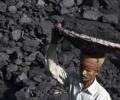
India's core sector output contracted by 0.4 per cent in March, marking the first decline in five months, with coal, crude oil, fertiliser, and electricity production falling, according to official data.

India's economy registered a robust 7.7 per cent growth in the fiscal year 2025-26, an increase from 7.1 per cent in the previous year, with the January-March quarter alone seeing a 7.8 per cent expansion.

The case for long-term investment in gold, however, remains intact.

A new report suggests that prolonged conflict in the Middle East could significantly impact India's GDP growth and inflation.
The initial cost of the reserve, expected to become operational by 2012, was estimated at Rs 2,400 crore (Rs 24 billion), excluding the cost of crude oil. Strategic Petroleum Reserves Ltd, special purpose vehicle that is implementing the project, has asked Engineers India Ltd to work on the revised cost," said sources. EIL is the management consultant for this project.

The government on Thursday restored liquefied petroleum gas (LPG) supplies to commercial consumers such as hotels, restaurants and other businesses to pre-crisis levels, and lifted sector-specific restrictions imposed during the recent West Asia conflict, in a sign that energy supply concerns are easing as global markets stabilise.

The Indian banking system's net liquidity surplus has reached a four-year high of Rs 4.57 trillion, driven by maturing government securities, with further maturities expected to push the surplus to around 5 trillion.

Amidst a sharp run-up in gold and silver prices, investors are advised to rebalance their portfolios by booking partial profits in precious metals and reallocating to domestic equities and debt, according to financial experts.

India's aviation sector is facing fresh turbulence, with rising fuel costs, the Ministry of Civil Aviation's free-seat directive, and geopolitical disruptions in West Asia clouding near-term earnings visibility.
Global crude oil prices slipped below $45 a barrel in early Asian trade on Monday after the Organization of Petroleum Exporting Countries cartel decided not to cut production.
RIL is doing better than the regional benchmark due to its ability to process heavy and sour crude, coupled with the higher product prices of petroleum products in the overseas markets. The company's GRMs were $13.6 a barrel in Q2 FY08. Analysts at domestic brokerage houses are estimating the GRMs of Reliance Industries at $14-$15 a barrel compared with the regional benchmark Singapore refining margin of $8 a barrel last month.

Indian equity investors experienced a significant loss of 16.32 lakh crore due to a two-day stock market decline fueled by escalating geopolitical tensions involving the US, Israel, and Iran.

India's fiscal deficit is projected to reach 4.5 per cent of GDP for the current fiscal year, exceeding the budgeted target, as the government's policy responses to the West Asia conflict are expected to strain public finances, according to research firm BMI.

Demand has fallen significantly in the US, which accounts for around 30 per cent of crude oil consumption and meets 60 per cent of its demand through imports.

Chinese stock markets suffered their biggest single-day drop since the global financial crisis.

'The MPC is likely to prioritise the key mandate, which is inflation, while relying on other instruments to stabilise the currency and bond markets.'

The year is not yet over and a few more duty hikes are not ruled out.

The task of Union Finance Minister Arun Jaitley to keep inflation under check, even when the country reeled under severe drought for two years in a row, and reduce the current account deficit, was made easier by low crude oil prices.

Saudi Arabia's steep cut in LPG benchmark prices has pushed India's household LPG underrecoveries to their lowest level in over two years, slashing oil companies' losses from Rs 200-250 per cylinder last year to about Rs 20-40 now.

With crude palm oil prices on the rise, companies have started to jack up rates of soaps and edible oils in order to pass on the hike to consumers. Crude palm oil, one of the main ingredients in the manufacture of some consumer goods, saw a price rise of 45.2 per cent in the last three months. One of the country's largest consumer companies, Hindustan Unilever, said it has already started to take price increases in the skin cleansing category.
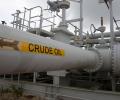
India will restrict crude oil purchases from Russia as part of an agreement reached with the US in exchange for lower trade tariffs, sources said, adding imports will continue for now by refiners such as Nayara Energy, which have no other alternative source. US President Donald Trump announced overnight that the United States will cut the reciprocal tariff on imports of Indian goods to 18 per cent from 25 per cent under a broader bilateral understanding.
